

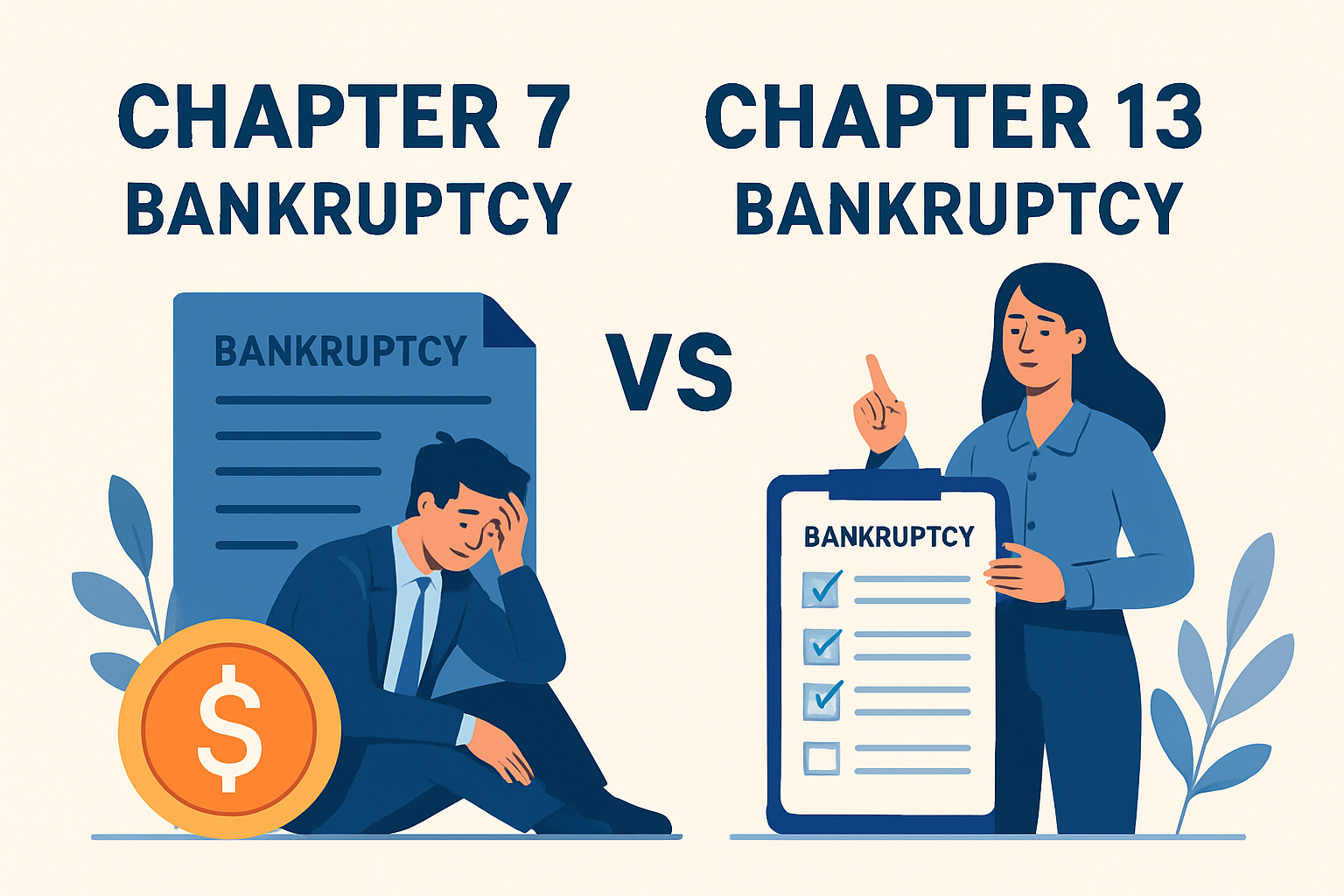
What Chapter 7 Bankruptcy Does Best
Chapter 7 is designed to discharge unsecured debts without requiring a multiyear repayment plan. In straightforward cases, the timeline from filing to discharge is often about four to six months. That speed is the main reason many consumers consider it first. A Chapter 7 Bankruptcy Attorney typically evaluates income under the means test, which compares household income to state median levels and, when needed, allows deductions based on IRS standards and actual secured debt obligations. If a filer qualifies, the case proceeds under a trustee who reviews assets, exemptions, and recent financial transactions. The practical advantage of Chapter 7 is simple: it can erase credit card debt, personal loans, old utility balances, and many medical bills quickly. For a client drowning in $40,000 of unsecured debt with no realistic repayment capacity, Chapter 7 often provides the cleanest reset. However, not every debt disappears. Student loans are usually nondischargeable absent undue hardship, domestic support obligations survive, and many recent taxes remain collectible. There are also asset considerations. If you own property that is not fully protected by exemption law, the trustee can liquidate that nonexempt portion for creditors. In practice, many no-asset cases end with no liquidation, but that outcome depends on careful exemption analysis, not hope.What Chapter 13 Bankruptcy Does Best
Chapter 13 works differently. Instead of seeking a rapid discharge, the filer proposes a repayment plan lasting three to five years. Payments go to a Chapter 13 trustee, who distributes funds according to statutory priority rules and the confirmed plan. A Chapter 13 Bankruptcy Attorney uses this chapter when the client needs time and court protection rather than immediate liquidation relief. In my experience, this is especially valuable for homeowners behind on mortgage payments. Chapter 13 can spread arrears over the life of the plan while the borrower resumes regular monthly payments, creating a structured way to stop foreclosure and keep the property. Chapter 13 also helps debtors manage car loan arrears, pay priority tax debts over time, protect nonexempt assets, and in some cases strip wholly unsecured junior liens on real estate, depending on jurisdiction and property value. It can provide a broader discharge for certain debts than Chapter 7 and may help individuals who do not pass the means test qualify for bankruptcy relief. The tradeoff is commitment. You must maintain plan payments, stay current on post-filing obligations, and tolerate trustee oversight for years. If income is unstable, the case becomes harder to complete successfully. Dismissal rates in Chapter 13 are historically significant, which is why feasibility matters more than optimism.Key Differences in Eligibility, Cost, and Timeline
The fastest way to compare the chapters is to examine eligibility, cost, duration, and asset risk. Chapter 7 eligibility turns largely on the means test and prior discharge rules. Chapter 13 eligibility depends on regular income and debt limits under current law. Attorney fees also differ. A Chapter 7 Bankruptcy Attorney usually charges a lower flat fee because the case is shorter, while a Chapter 13 Bankruptcy Attorney often charges more overall, with part of the fee paid through the plan. Court filing fees differ too, though they are a smaller part of total cost than most people expect.| Factor | Chapter 7 | Chapter 13 |
|---|---|---|
| Main purpose | Discharge unsecured debt quickly | Repay debt under court-approved plan |
| Typical duration | About 4 to 6 months | 3 to 5 years |
| Income rule | Means test applies | Regular income required |
| Asset risk | Nonexempt assets may be sold | Assets often retained if plan pays required value |
| Best for | Low repayment ability, heavy unsecured debt | Mortgage arrears, tax debt, asset protection |
How Property, Credit, and Specific Debts Are Treated
Property treatment is where legal advice becomes essential. Exemptions vary by state, and some states allow use of federal exemptions while others require state exemptions. A home, vehicle, retirement account, tools of trade, and household goods may be fully or partially protected depending on equity and applicable law. I have seen filers assume they would lose everything under Chapter 7, only to discover exemptions covered all major assets. I have also seen the opposite: a tax refund, lawsuit claim, or valuable second vehicle created avoidable risk because no one reviewed exemptions carefully before filing. Credit reporting is another concern. A Chapter 7 bankruptcy can remain on a credit report for up to ten years, while Chapter 13 generally remains for up to seven years. That does not mean credit is ruined for that entire period. Many clients begin receiving credit offers soon after discharge, though often at unfavorable rates initially. Mortgage qualification, rental screening, and insurance pricing can all be affected, so rebuilding should include secured cards, on-time payments, low utilization, and review of all three credit reports from Equifax, Experian, and TransUnion. Specific debts also drive chapter choice. Mortgage arrears, priority taxes, domestic support obligations, and car loans are treated differently from dischargeable unsecured debt. Chapter 13 is often better when you need a mechanism to cure defaults. Chapter 7 is often better when secured property is already unaffordable and surrender makes financial sense. Neither chapter should be chosen based on stigma or advertising language. The decision should be based on what the Bankruptcy Code actually allows in your fact pattern.When to Hire a Chapter 7 Bankruptcy Attorney or Chapter 13 Bankruptcy Attorney
People often ask whether they can file on their own. Legally, yes. Practically, bankruptcy is full of traps: means test errors, exemption mistakes, creditor classification issues, preference and transfer problems, missed documents, and unrealistic repayment proposals. A Chapter 7 Bankruptcy Attorney helps evaluate discharge risks, reaffirmation agreements, asset exposure, and trustee questions. A Chapter 13 Bankruptcy Attorney builds a confirmable plan, calculates disposable income, addresses secured claims, and responds to objections from trustees or creditors. Local rules matter, and judges expect compliance. If you are behind on a mortgage, have tax debt, own a business interest, recently transferred property, repaid relatives before filing, or expect an inheritance, attorney involvement is especially important. The strongest consultations are document driven. Bring pay stubs, tax returns, creditor statements, property values, lawsuit paperwork, and a list of all assets and transfers. That allows counsel to compare chapters with precision rather than generalities. Chapter 7 and Chapter 13 are both legitimate debt relief tools, but they solve different problems. Chapter 7 is usually the better fit when you need speed, have mostly unsecured debt, and can protect your property with available exemptions. Chapter 13 is usually the better fit when you need time to catch up on secured or priority obligations, protect valuable assets, or do not qualify for Chapter 7. The smartest move is not guessing based on headlines or advice from friends. It is getting a case-specific analysis from a qualified Chapter 7 Bankruptcy Attorney or Chapter 13 Bankruptcy Attorney who understands your local court, exemption rules, and financial goals. If you are considering bankruptcy, act before collections, repossession, or foreclosure narrows your options. Gather your documents, list every debt, and schedule a consultation with an experienced bankruptcy lawyer. A clear comparison today can prevent expensive mistakes tomorrow and put you on the fastest path toward lasting financial stability.Frequently Asked Questions
What is the main difference between Chapter 7 and Chapter 13 bankruptcy?
The biggest difference is how each chapter deals with debt. Chapter 7 is often called a liquidation bankruptcy because it is designed to wipe out qualifying unsecured debts, such as credit card balances, medical bills, and many personal loans, in a relatively short period of time. In many cases, filers keep most or all of their property because exemptions may protect essential assets, but the process is still centered on debt discharge rather than repayment. A Chapter 7 case usually moves faster than Chapter 13, often lasting just a few months from filing to discharge.
Chapter 13, by contrast, is a reorganization bankruptcy. Instead of eliminating debt right away, it allows the filer to propose a court-approved repayment plan that typically lasts three to five years. During that time, the person makes monthly payments to a trustee, who distributes funds to creditors according to the plan. Chapter 13 is often used by people who have regular income and need time to catch up on mortgage arrears, car payments, tax debt, or other obligations they want to keep in good standing. In simple terms, Chapter 7 is generally about faster debt relief, while Chapter 13 is more about structured repayment and asset protection.
Who usually qualifies for Chapter 7 versus Chapter 13?
Eligibility depends on income, debt levels, and financial goals. Chapter 7 is typically available to individuals whose income is low enough to pass the means test, which compares household income to the median income in the filer’s state and examines whether there is enough disposable income to repay creditors. If a person’s income is too high or the means test suggests they can afford to pay back a portion of their debts, Chapter 7 may not be available. That is one reason many people speak with a Chapter 7 Bankruptcy Attorney before filing, because a careful review of income, expenses, and exemptions can determine whether Chapter 7 is realistic.
Chapter 13 is generally for people with regular income who can afford a monthly repayment plan. It is commonly a better fit for individuals who are behind on secured debts, want to stop foreclosure, or need a structured way to pay nondischargeable obligations over time. There are also debt limits that apply to Chapter 13, so it is not open-ended. In practice, someone may lean toward Chapter 13 not because Chapter 7 is impossible, but because Chapter 13 better serves their needs, especially if they are trying to protect valuable property, cure missed mortgage payments, or manage debts that cannot easily be discharged in Chapter 7.
Will I lose my home, car, or other property if I file bankruptcy?
Not necessarily, and this is one of the most important issues when comparing Chapter 7 and Chapter 13. In Chapter 7, whether you keep property depends largely on exemption laws and whether you are current on payments for secured assets like a house or vehicle. Bankruptcy exemptions can protect certain amounts of equity in your home, car, household goods, retirement accounts, and other essentials. If an asset is fully exempt, the Chapter 7 trustee usually cannot sell it. If an asset is not fully protected and has significant nonexempt value, the trustee may have the authority to liquidate it to pay creditors. That risk is one reason asset analysis is so important before filing.
Chapter 13 often gives filers more flexibility to keep property because it does not usually involve liquidation. Instead, the filer repays creditors through a plan over time. This can be especially helpful for someone who has fallen behind on mortgage payments but wants to keep the home, or for a person with nonexempt assets they would likely lose in Chapter 7. Chapter 13 can also allow a debtor to catch up on certain secured debts while maintaining future payments. Even so, keeping property still depends on following the repayment plan, staying current on ongoing obligations, and meeting all court requirements. The specific outcome depends on the value of the asset, the amount owed, available exemptions, and the chapter chosen.
Which debts can be discharged in Chapter 7 and Chapter 13?
Both Chapter 7 and Chapter 13 can provide powerful relief, but not all debts are treated the same way. In general, unsecured debts such as credit card debt, medical bills, personal loans, past-due utility bills, and certain judgments are often dischargeable. Chapter 7 is known for quickly eliminating many of these obligations, which is why it is often attractive to people overwhelmed by unsecured debt. Once the discharge is entered, creditors covered by the discharge generally can no longer pursue collection.
Chapter 13 can also discharge many unsecured debts, but the process happens after the successful completion of the repayment plan. It may also help with debts that require repayment over time, including mortgage arrears, car loan deficiencies, or certain tax obligations. However, some debts are difficult or impossible to discharge in either chapter, including most child support, alimony, many recent tax debts, most student loans absent a separate showing of undue hardship, and debts arising from certain fraud or willful misconduct. The practical difference is that Chapter 7 focuses more on immediate discharge of qualifying debt, while Chapter 13 often combines partial repayment with eventual discharge of remaining eligible balances.
How should someone decide whether Chapter 7 or Chapter 13 is the better option?
The right choice depends on your income, assets, debt type, and long-term financial priorities. If you need fast relief from unsecured debt, do not have significant nonexempt property, and qualify under the means test, Chapter 7 may be the more efficient path. It is often the preferred option for individuals facing heavy credit card or medical debt with little realistic ability to repay it. For many people, the appeal of Chapter 7 is its speed, simplicity compared with a multiyear plan, and the chance for a fresh financial start sooner.
Chapter 13 may be the better option if you are trying to stop foreclosure, catch up on missed payments, protect valuable assets, pay certain debts over time, or do not qualify for Chapter 7. It can also be useful for people whose income is steady enough to support a repayment plan and who need a structured framework to regain control of their finances. The most effective way to decide is to review your full financial picture with a qualified bankruptcy attorney who can analyze your eligibility, property exemptions, secured debts, arrears, and discharge goals. Filing under the wrong chapter can have lasting consequences, so a careful legal evaluation before filing is essential.